
Cookies Policy

The website of the University of Cádiz uses its own and third-party cookies to carry out analysis of use and measurement of traffic, as well as to allow the correct functioning in social networks, and in this way to improve your browsing experience.

If you want to configure cookies, press the button Customize Cookies. You can also access the cookie settings at any time from the corresponding link in the footer.

For more information about cookies you can consult the Cookies policy from the website of the University of Cádiz.

Cookies customization

The website of the University of Cádiz uses its own and third-party cookies to carry out analysis of use and measurement of traffic, as well as to allow the correct functioning in social networks, and in this way to improve your browsing experience.

For more information about cookies you can consult the Cookies policy from the website of the University of Cádiz. You can also access the cookie settings at any time from the corresponding link in the footer.

You can configure the website cookies according to their purpose:

  • Statistical analysis

    Third-party cookies (Google Analytics) are used on this site that allow the number of users to be quantified anonymously (personal data will never be obtained to identify the user) and thus be able to analyze the use made by users of our service, in order to improve the browsing experience and offer our content optimally.

  • Social networks

    Third-party cookies are used on this website that allow the proper functioning of some social networks (mainly YouTube and Twitter) without using any personal data of the user.

UniversidaddeCádiz
Facultad de Ciencias Sociales y de la Comunicación
evento

Visita al Instituto Andaluz de Administración Pública y a la Delegación del Banco de España en Sevilla 12 February 2026
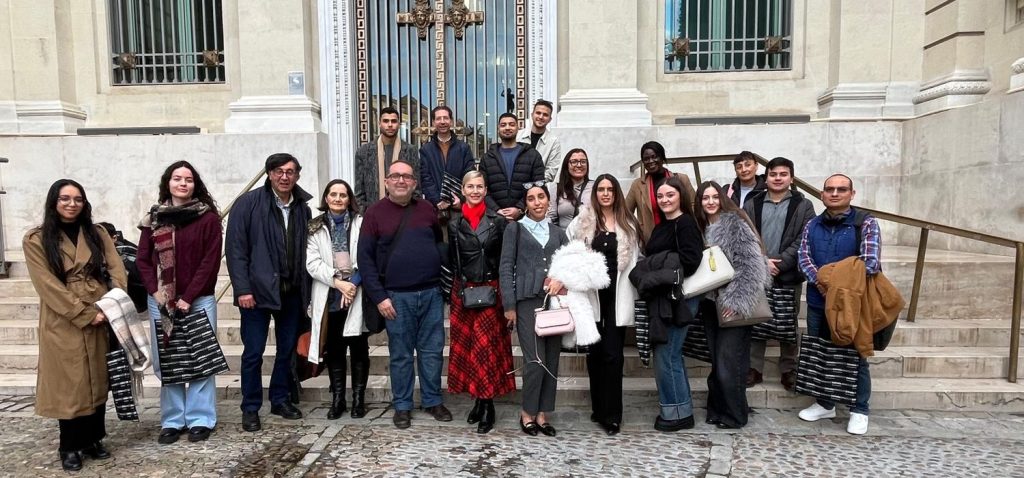
Visita al Instituto Andaluz de Administración Pública y a la Delegación del Banco de España en Sevilla

El alumnado de la promoción del máster 2025-26 ha girado, hoy 12 de febrero de 2026, una visita al Instituto Andaluz de Administración Pública, donde el personal de dicha institución les informó de la labor que desarrolla en materia de innovación, evaluación de políticas públicas, gestión de conocimiento, selección de personas y mapas de competencias.

Posteriormente, visitaron la delegación del Banco de España en Sevilla, donde D. Fernando Arteaga les informó de la labor de control, supervisión de las entidades, gestión de reservas de divisas y circulación de monedas y billetes que realiza la entidad. El Banco de España fue creado en 1782 bajo el nombre de Banco Nacional de San Carlos, por el rey Carlos III.